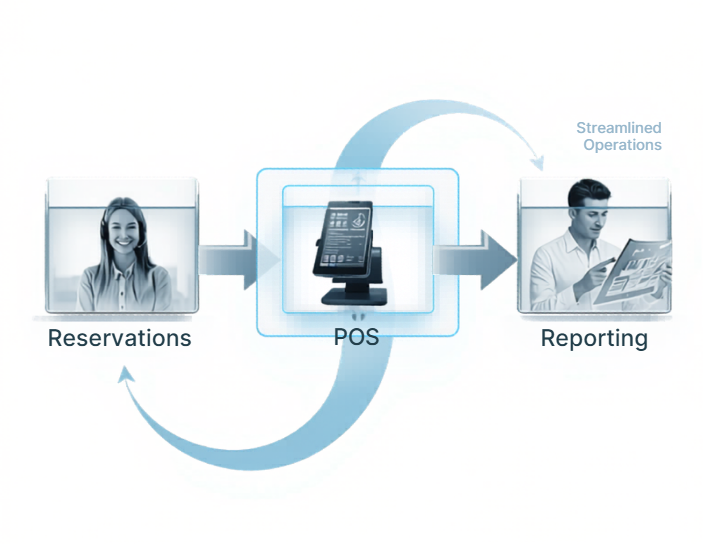
The plan when we launched Cardwatch Reservations was simple. Give senior living communities a better way to manage dining reservations with software that stays out of the way.
On paper, it looked straightforward. In practice, it revealed something more complex about how dining management actually works inside senior living communities.
What We Didn’t See Coming
There’s always a gap between building software and watching it being used in real environments. Once Cardwatch Reservations went live, that gap became immediately clear.
Communities weren’t just booking tables. Booking reservations was the easy part. What mattered was everything around it. Teams coordinating across shifts, resident preferences changing daily, and last-minute adjustments happening constantly. Reservations were just the visible layer of a much larger dining operation.
It became clear that senior living dining management is not just about bookings. It is about coordination, timing, and communication across the entire service flow.
The communities that benefited most were not the ones that adapted their processes to fit the system. They were the ones where the system naturally fit into how they already worked. That insight shaped everything that came next.
What Good Software Actually Does
When software truly works, it disappears into the background.
That is what we saw across every community using Cardwatch Reservations. Staff stopped talking about the system itself. Instead, they talked about smoother service, fewer interruptions, and better coordination across dining operations.
What used to be paper lists, phone calls, and constant back-and-forth became one connected flow of information. Senior living communities finally had a clearer way to manage dining without adding complexity to daily operations.
This is where senior living dining management software proves its value. Not by adding more tools, but by reducing friction in how teams already work.
Why Dining Management Needed to Evolve
As communities grow more flexible, dining expectations shift with them. Residents are not always following fixed schedules. Families visit more frequently. Service needs change throughout the day.
Without a connected system, dining management becomes reactive. Teams rely on memory, manual tracking, or informal communication. That often leads to inefficiencies, uneven staffing, and avoidable stress during peak hours.
Cardwatch Reservations showed us that senior living dining management software needs to do more than handle bookings. It needs to support the entire dining workflow from front of house to kitchen coordination.
The Next Step Is a Big One
When operations click, everything changes. The pace of service improves. Communication becomes clearer. Teams spend less time reacting and more time focusing on residents.
That experience gave us a clear direction forward.
Cardwatch 4.0 brings reservations, POS, mobile ordering, and kitchen operations into one connected platform. Instead of separate tools working in isolation, everything now informs everything else.
This is not a collection of features built in isolation. It is the result of feedback from senior living communities using Cardwatch every day to manage real dining operations.
Built for How Senior Living Actually Works
Cardwatch 4.0 was shaped directly by the realities of senior living dining management. Not assumptions, not theory, but daily operational challenges from real communities.
The goal is simple. Reduce friction, improve visibility, and make dining operations easier to manage without adding complexity.
This release is a major step toward a more connected approach to senior living dining management software, and it sets the foundation for what comes next.
More updates will follow as Cardwatch 4.0 rolls out.