
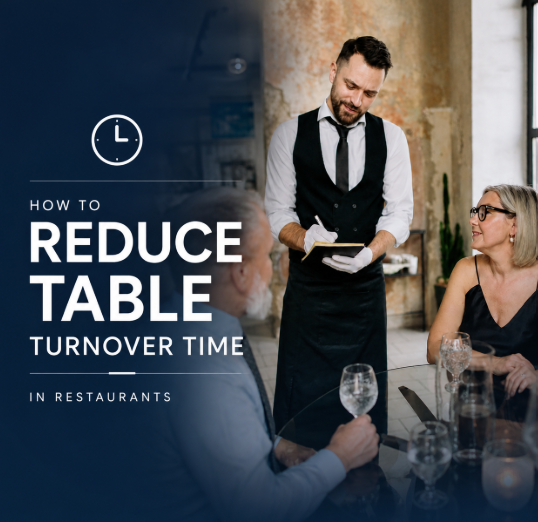
It’s a Friday night. The dining room is packed, there’s already a wait at the door, and somewhere between the kitchen and table seven something went sideways. Nobody can quite put their finger on it. The server’s doing their best. The food’s just… sitting there. And the next party is watching all of it. If you’re trying to reduce table turnover time, this is usually where the problem lives… not in one big failure, but in a lot of small pauses nobody planned for.
It’s Rarely a Speed Problem
When table turnover is slow, the instinct is to push the team harder. Move faster. Turn tables quicker.
But most dining teams are already working hard. The issue usually isn’t effort. It’s the gaps between steps that nobody is tracking.
The order that took an extra two minutes to reach the kitchen. The cleared table that sat idle because nobody got the reset notification. The bill that came out late because the server had to physically hunt down the status.
None of those feel like serious problems in isolation. But they happen at every table, every service. By the end of a busy night, they’ve cost you covers you didn’t know you lost.
What Faster Table Service Is Actually Made Of
Most people think of turnover as how long a guest sits. It’s actually the sum of every handoff in the experience.
How quickly a table gets acknowledged after seating. How fast the first order hits the kitchen. Whether courses come out together or staggered. How long the bill takes once a guest is clearly ready to go.
Each of those moments is a place where time either moves or stalls. They depend less on individual effort than on how well information moves between front of house and back.
How to Improve Table Turnover Without Rushing Anyone
Operations that turn tables well aren’t necessarily working harder. They’ve taken out the friction that creates the pauses in the first place.
Staff who can see the real-time status of every table don’t have to wait to find out something went wrong. They already know. Orders reach the kitchen without delay, the kitchen sends updates back without anyone prompting them, and the next step surfaces on its own. It’s a pretty different experience than the alternative.
Fewer things fall through the cracks. And the ones that do get caught faster.
Where Connected Systems Come In
Most operations run their POS, reservations, and kitchen tools as completely separate things. So staff end up spending chunks of every shift just filling in the gaps between them. Physically walking back to check on an order. Calling through to the kitchen for an update. Scanning the room to figure out which tables are close to turning.
It works, but it costs time. And time is exactly what table turnover is made of.
When those systems connect, the handoffs happen on their own. Every stage of service stays visible, and the right information reaches the right person without anyone having to chase it down.
Cardwatch 4.0 runs on exactly that idea. One connected platform for POS, reservations, and kitchen operations so service flows without the constant back and forth.
Where to Start
If turnover is slower than it should be, start by looking at where the pauses actually happen in your service flow.
Where does time go between seating and the first order on a busy night? Think about how course timing reaches the floor, how long bill presentation takes once a guest is clearly done, and whether your table reset process depends on someone noticing rather than being notified.
In most cases the answer isn’t more staff. It’s better information getting to the right people faster.
The Bottom Line
Reducing table turnover time isn’t about putting pressure on your team. It’s about removing the friction that causes delays before they happen.
When your operation runs as one connected system, the whole service moves better. Often without anything feeling rushed at all.