
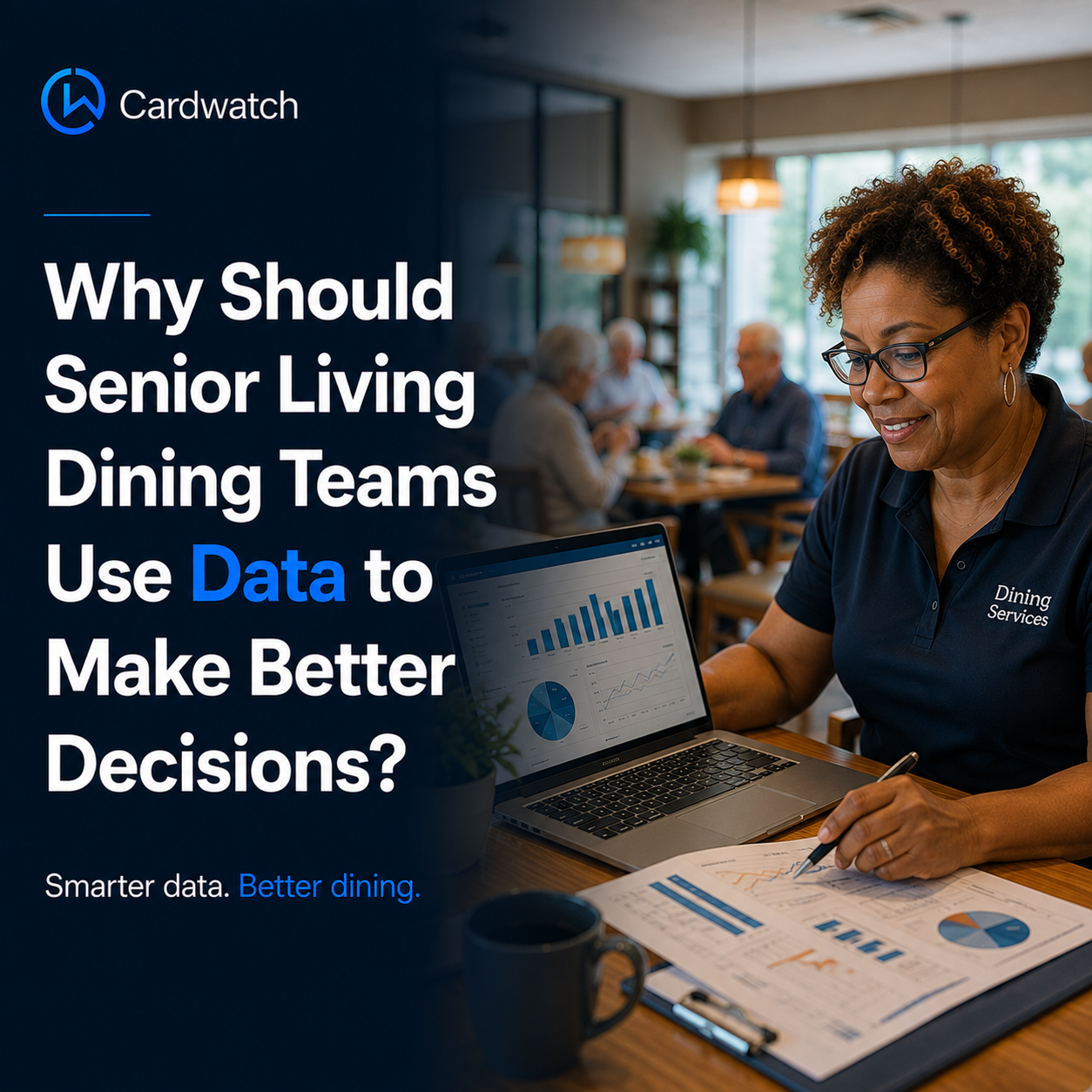
Every meal served generates valuable information.
Unfortunately, many senior living communities only use that information to complete transactions instead of improving operations.
Modern dining data can reveal trends that would otherwise go unnoticed, helping communities make informed decisions that improve efficiency, resident satisfaction, and financial performance.
For example, reports can highlight which dining venues are busiest, when peak service times occur, and which menu items residents enjoy the most. This allows dining teams to better plan staffing levels, inventory, and food production while reducing waste.
Data can also uncover operational issues before they become larger problems.
A report may reveal unusual meal usage, unexpected spending patterns, incorrect tax settings, or meal plan configurations that aren’t performing as intended. Rather than relying on assumptions, administrators can quickly identify the root cause and make informed adjustments.
Resident data is equally valuable.
Understanding dining preferences, dietary requirements, and meal participation helps communities deliver a more personalized experience. If certain menu options are consistently popular or residents are participating less frequently in meal service, dining teams can respond proactively by adjusting menus, meal schedules, or special events.
Financial reporting is another important advantage.
Communities can review Dining Dollars, Meal Tokens, charge activity, subsidies, discounts, and resident balances to ensure billing remains accurate and policies are working as expected. Having this level of visibility helps reduce manual audits and gives administrators greater confidence in their dining operations.
Perhaps the greatest benefit of data is that it supports continuous improvement.
Instead of waiting for residents to report issues or relying on manual reviews, communities can regularly monitor key performance indicators and make small adjustments that lead to better outcomes over time.
At Cardwatch, reporting is designed to provide meaningful insights rather than simply presenting numbers. By combining flexible meal plan management with detailed operational reporting, communities gain the information they need to improve resident experiences, optimize daily operations, and make smarter business decisions.
The best decisions aren’t based on guesswork.
They’re based on data that helps communities understand what’s happening today and prepare for what’s coming tomorrow.