
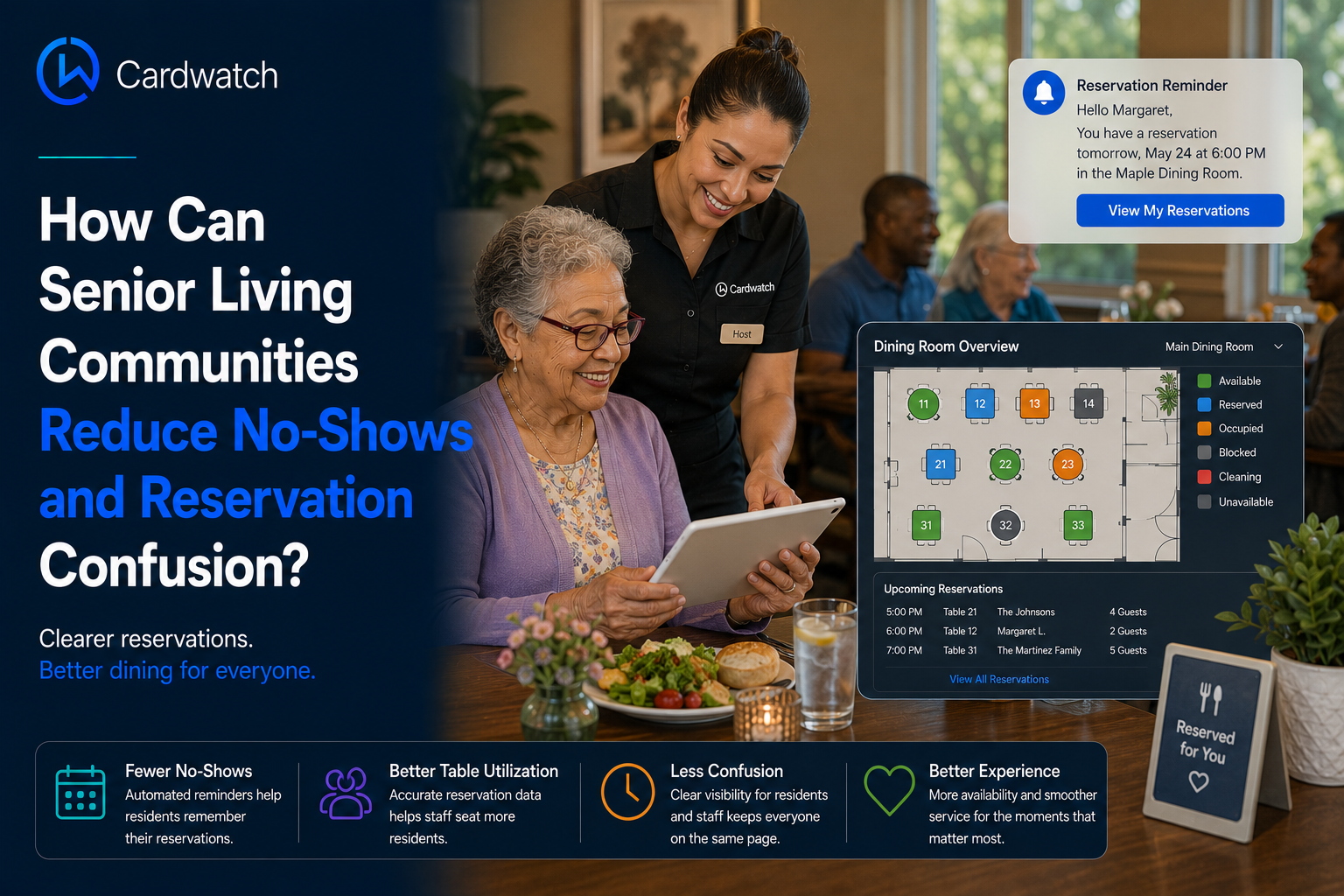
An empty reserved table during a busy dinner service represents more than unused space.
Other residents may have wanted that table. Staff may have planned around the reservation. Meanwhile, the resident who made the booking may have simply forgotten or changed their plans.
Reservation confusion is especially difficult when bookings are managed manually.
Staff need a reliable way to understand which tables are reserved, when residents are expected to arrive, and what availability remains throughout service.
Residents also benefit from having greater visibility into their own plans.
A digital reservation experience creates a clearer connection between the resident and the dining room. Instead of relying entirely on staff to create and manage bookings, residents can interact more directly with the reservation process.
For dining teams, centralized reservation information makes it easier to prepare for service and understand expected traffic.
It also improves table management.
A table isn’t simply “available” or “unavailable” throughout an entire evening. Its availability changes based on reservation times, occupancy, blocked periods, and other operational requirements.
Technology can help dining teams understand those changes without relying on handwritten notes or memory.
Cardwatch’s reservation tools connect resident booking with dining-room management, helping communities create a clearer and more organized reservation process.
A reservation system should do more than record names.
It should help residents and dining teams stay on the same page.