
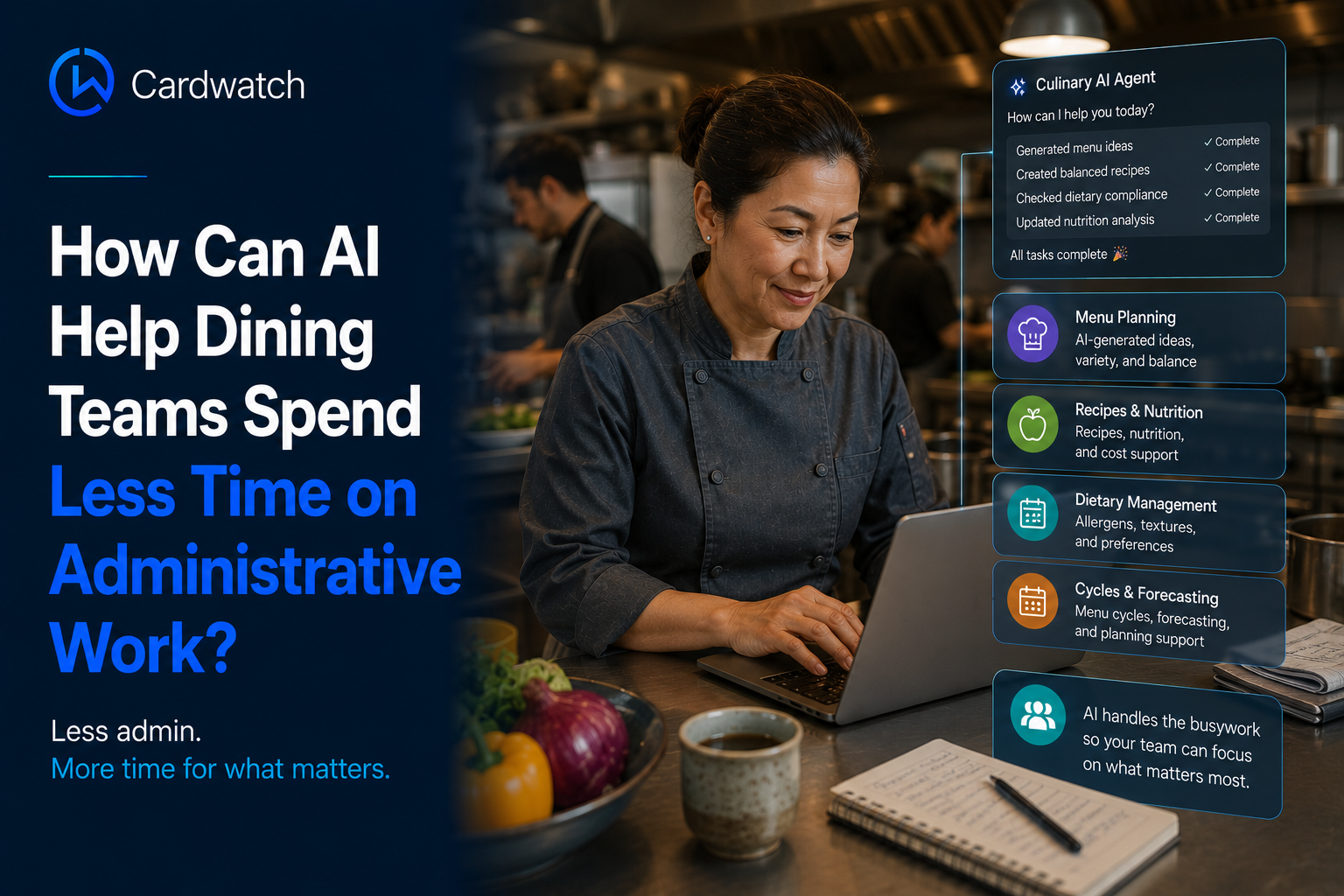
Chefs should be thinking about food.
Dining managers should be thinking about residents, service, quality, and their teams.
Yet a significant amount of their time can disappear into administrative work.
Menu planning, recipes, dietary considerations, documentation, revisions, and recurring planning tasks all require attention before a single meal reaches the dining room.
Technology has traditionally helped by digitizing these processes.
AI creates an opportunity to go further.
Instead of simply providing another place to enter information, AI can assist with the work itself. It can help generate ideas, organize information, support menu and recipe development, and make repetitive culinary tasks easier to complete.
AI agents can take that experience another step forward.
By working across connected tasks, agents can help reduce the constant back-and-forth that makes administrative work feel cumbersome. Rather than treating each culinary activity as an isolated process, the experience can become more continuous and streamlined.
That doesn’t mean handing decision-making over to artificial intelligence.
Dining professionals understand their residents, budgets, kitchens, and communities in ways technology cannot. Their expertise remains essential for reviewing recommendations and making final decisions.
The value of AI is in giving some time back to those professionals.
That’s what we’re working toward with agents in Cardwatch Culinary AI: reducing unnecessary steps and making everyday culinary workflows feel more seamless.
Technology is most valuable when people spend less time managing it.
And more time doing the work they actually care about.