
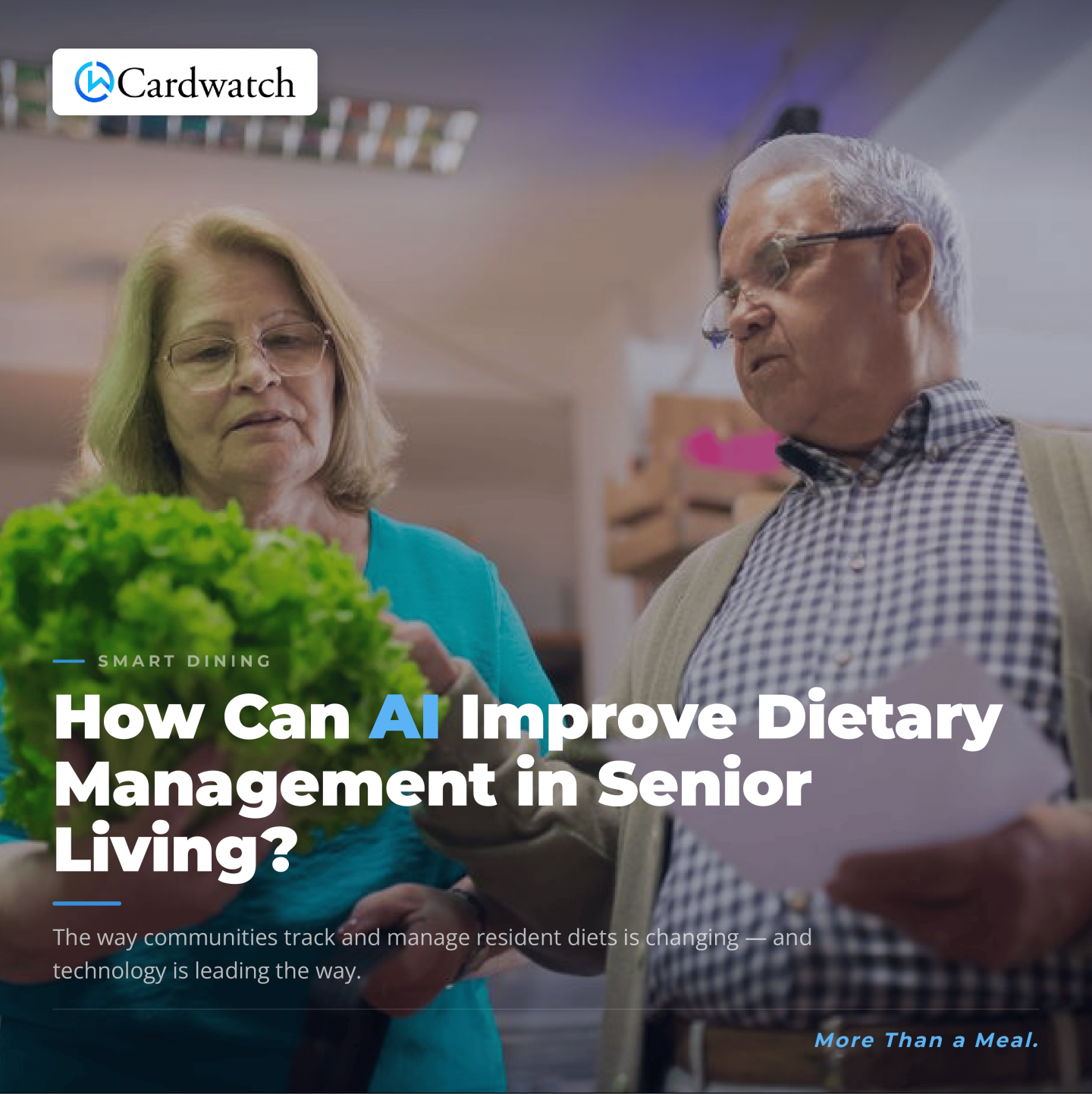
Dietary management in senior living is becoming increasingly complex.
Communities must accommodate allergies, dietary restrictions, texture modifications, nutrition requirements, and resident preferences, all while overseeing staffing challenges and growing expectations for personalized dining experiences.
Traditionally, creating menus, modifying recipes, reviewing nutritional information, and coordinating with dietary teams has required a significant amount of time and mental drain.
This is where AI is beginning to transform senior living dining.
Rather than replacing chefs or dietitians, AI helps them work more efficiently by reducing repetitive administrative tasks and simplifying dietary planning.
With AI-powered dietary management, communities can generate menu ideas, build menu cycles, adapt recipes to specific dietary requirements, and support nutritional goals more efficiently than traditional manual processes.
Whether a community is focused on low-sodium diets, diabetic-friendly meals, allergy management, or other nutritional needs, AI can help dietary teams create menus that align with those requirements while maintaining variety and resident choice.
One of the biggest advantages of AI is its ability to support creativity.
Chefs can explore new recipe ideas, expand menu offerings, and accommodate a wider range of resident preferences without dramatically increasing their workload. This helps communities deliver more personalized dining experiences while avoiding repetitive menu cycles.
AI can also improve collaboration between chefs, dietitians, dietary teams, and dining staff by helping ensure everyone is working with the same dietary information and nutritional guidelines.
As staffing shortages continue to impact senior living communities, AI is becoming an increasingly valuable tool. By reducing time spent on manual planning and administrative tasks, dietary teams can focus more on resident care, food quality, and the overall dining experience.
Most importantly, AI helps communities balance two priorities that are often difficult to achieve at the same time: dietary compliance and resident satisfaction.
The future of senior living dining is not about replacing people with technology. It is about giving talented chefs, dietitians, and dining teams better tools to deliver safer, more personalized, and more enjoyable dining experiences.
That is why AI is quickly becoming an important part of modern dietary management in senior living.