
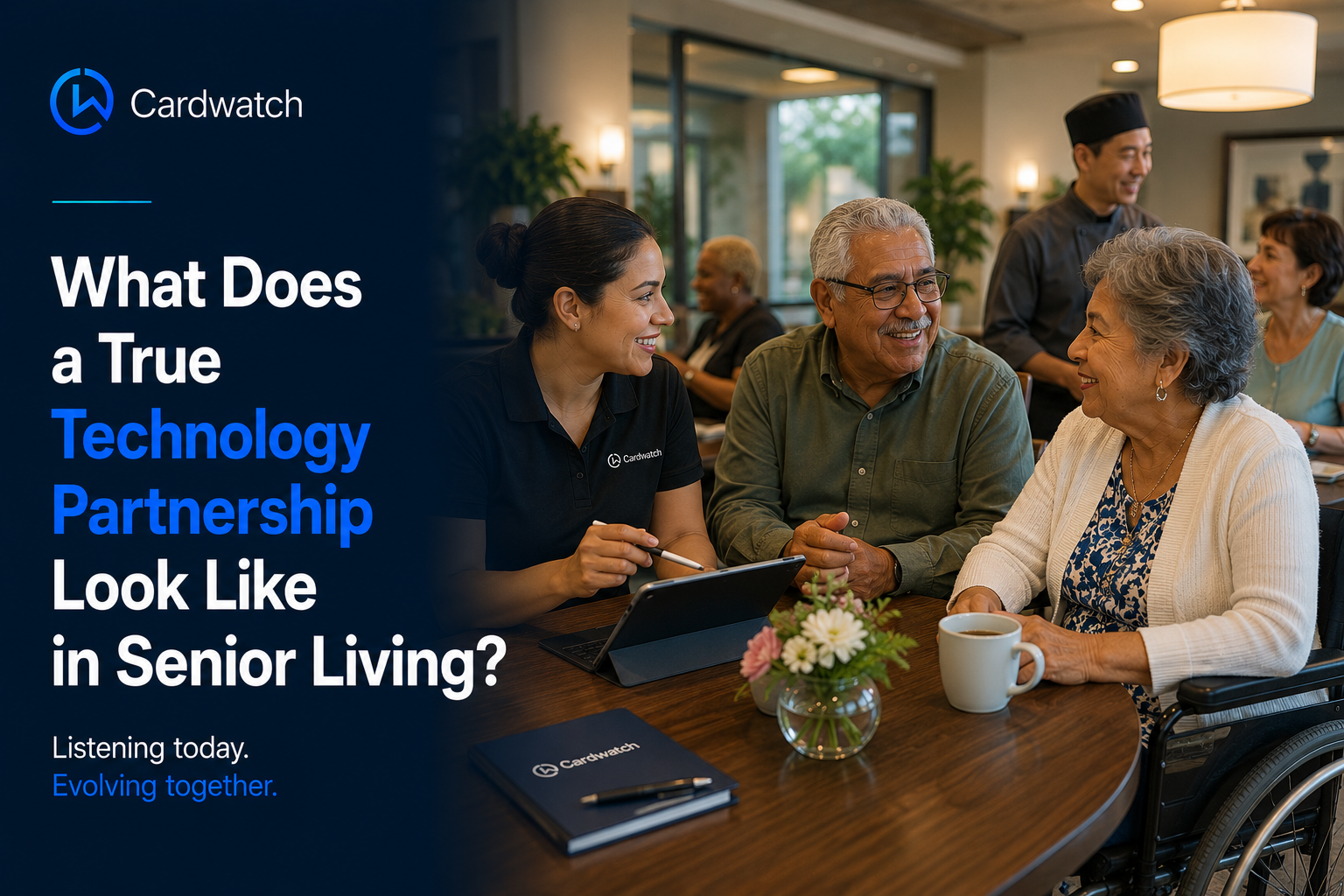
Buying software and building a technology partnership aren’t necessarily the same thing.
A traditional software relationship can be fairly transactional. A product is selected, implemented, supported, and eventually renewed.
But senior living operations rarely stand still.
Resident expectations change. Dining programs evolve. New challenges emerge. Teams discover better ways of working. Technology that was a perfect fit several years ago may need to evolve alongside the community.
That’s why a strong technology partnership should continue long after implementation.
It starts with listening.
When a dining director, chef, finance team, or community leader says, “We need to be able to do this differently,” the conversation shouldn’t necessarily end with whether that functionality exists today.
Sometimes the more valuable question is:
Why?
Understanding the problem behind a request can lead to a better solution. It can also reveal that something experienced by one community is relevant to many others.
This is where close relationships between customers and product teams become especially valuable.
When feedback has to travel through several organizational layers before reaching someone who can influence the product, valuable context can easily be lost. Keeping customers closer to product decision-makers creates opportunities for more meaningful conversations.
At Cardwatch, many ideas for improving our technology begin with the communities using it.
That doesn’t mean every request automatically becomes a feature. Our responsibility is to understand the problem, determine the best solution, and consider how it fits into the larger product.
But our customers should have a voice in that process.
Being a smaller, independently operated company allows us to maintain that connection. The people listening to customer challenges are never very far from the people making decisions about where the product goes next.
Ultimately, a great technology partner shouldn’t simply provide software.
They should understand your operation, listen when your needs change, and continue evolving with you.
Because sometimes the best product roadmap starts with listening to the people using the product.