
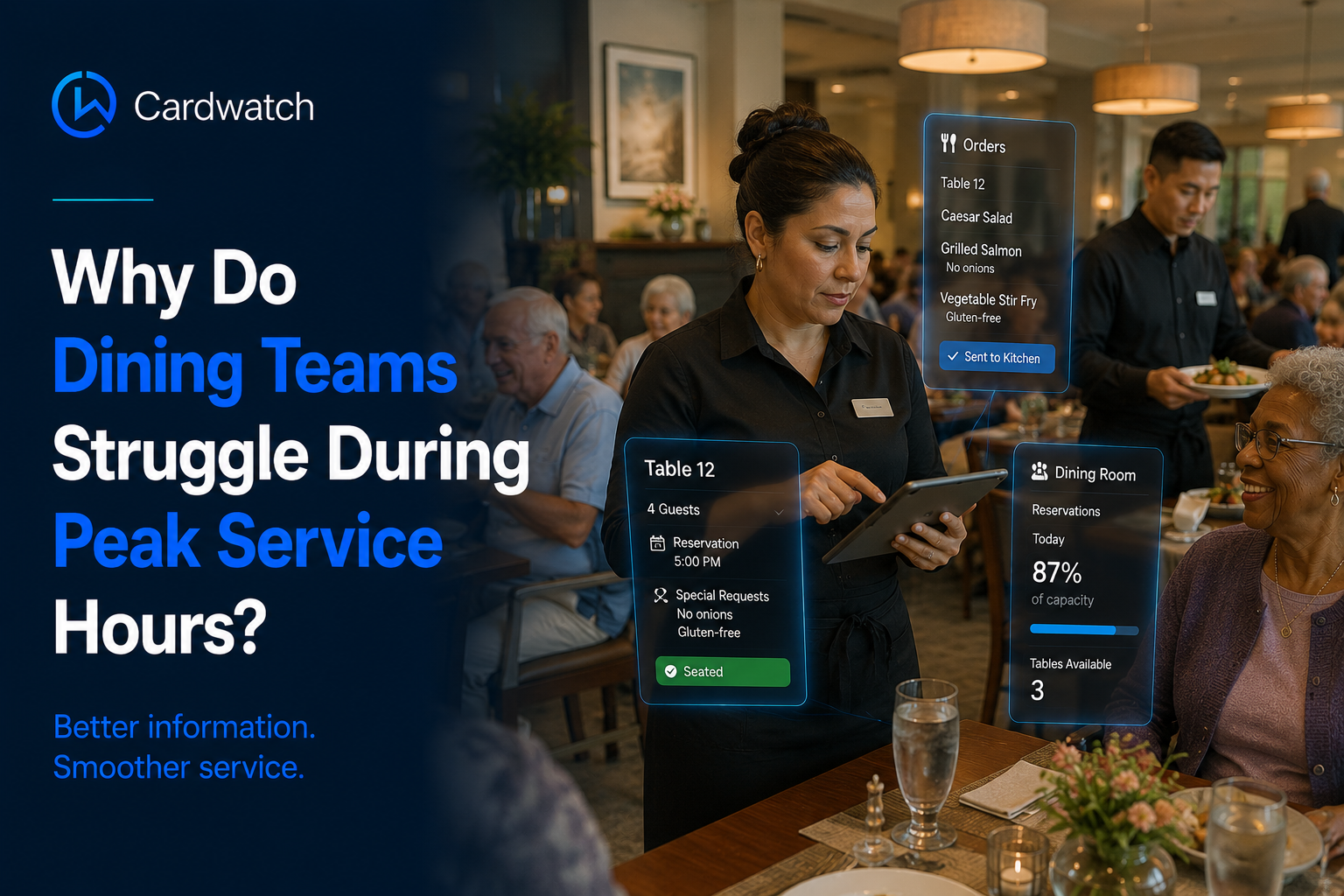
A dining room can feel completely different at 5:00 PM than it did at 4:30.
Residents arrive at once. Hosts are checking reservations. Servers need table information. Orders begin flowing into the kitchen, and staff are simultaneously answering questions and accommodating changes.
Peak service exposes inefficiencies very quickly.
The problem isn’t always insufficient staffing. Sometimes, employees simply don’t have the right information at the right time.
A host needs to know which tables are available. Servers need accurate resident and order information. The kitchen needs orders communicated clearly. Managers need visibility into what’s happening throughout service.
When those processes rely on disconnected systems or manual communication, staff spend valuable time coordinating information instead of serving residents.
A connected Fine Dining system can simplify that environment.
Table and reservation management can give hosts a clearer view of the dining room, while digital ordering helps information move efficiently from the server to the kitchen.
Resident reservations made in advance can also provide greater visibility into expected demand before service begins.
None of this eliminates the realities of a busy dinner rush.
It does, however, remove unnecessary friction.
The best dining technology should feel almost invisible during service. Employees shouldn’t have to think about where information is stored or navigate complicated processes while residents are waiting.
At Cardwatch, Fine Dining and reservation tools are designed to connect these workflows so dining teams can spend less time managing the process and more time providing hospitality.
Peak hours will always be busy.
They don’t have to be chaotic.