
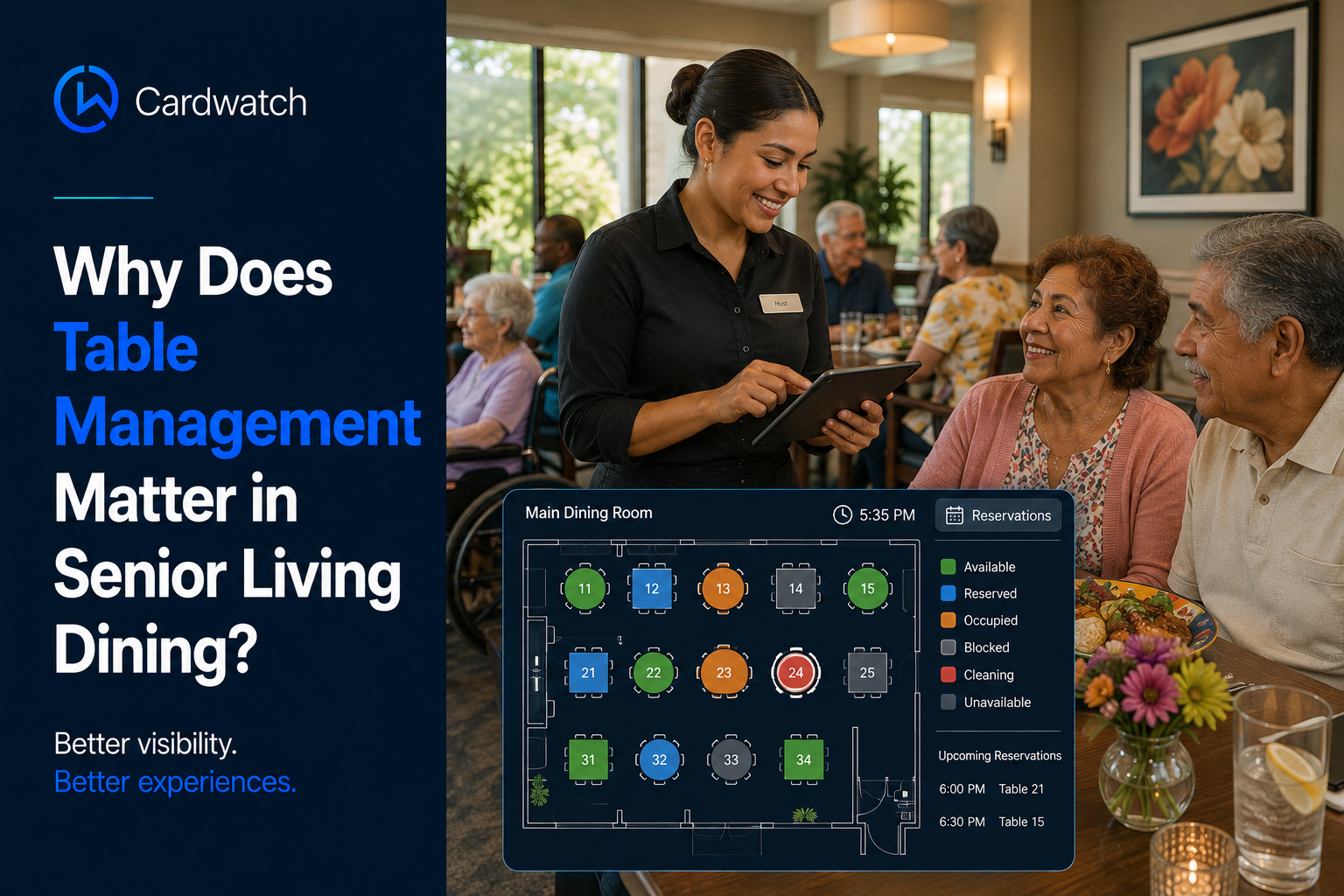
At first glance, table management sounds simple.
A table is either available or it isn’t.
During an actual senior living dining service, however, the situation is much more dynamic.
A table may be available now but reserved later. Another may be occupied. A table may need to be blocked from service, while another is temporarily unavailable. As residents arrive, dine, and leave, the status of the dining room continually changes.
During busy periods, keeping track of that information manually becomes difficult.
Poor visibility can lead to longer waits, seating confusion, accidentally using a reserved table, or leaving available capacity unused.
That’s why a visual floor plan can be so valuable.
Instead of relying on paper diagrams or staff memory, hosts can see the dining room and understand table status in one place. Reservations and table availability can work together so staff know not only what’s happening now, but what needs to happen next.
This becomes even more valuable when residents can make reservations digitally.
The resident-facing experience and staff-facing dining operation should not exist independently. A reservation made by a resident should become useful operational information for the team managing the dining room.
Cardwatch Fine Dining brings these workflows together, helping communities manage reservations and table activity within the dining experience.
Good table management isn’t really about tables.
It’s about creating a smoother experience for the people sitting at them.