
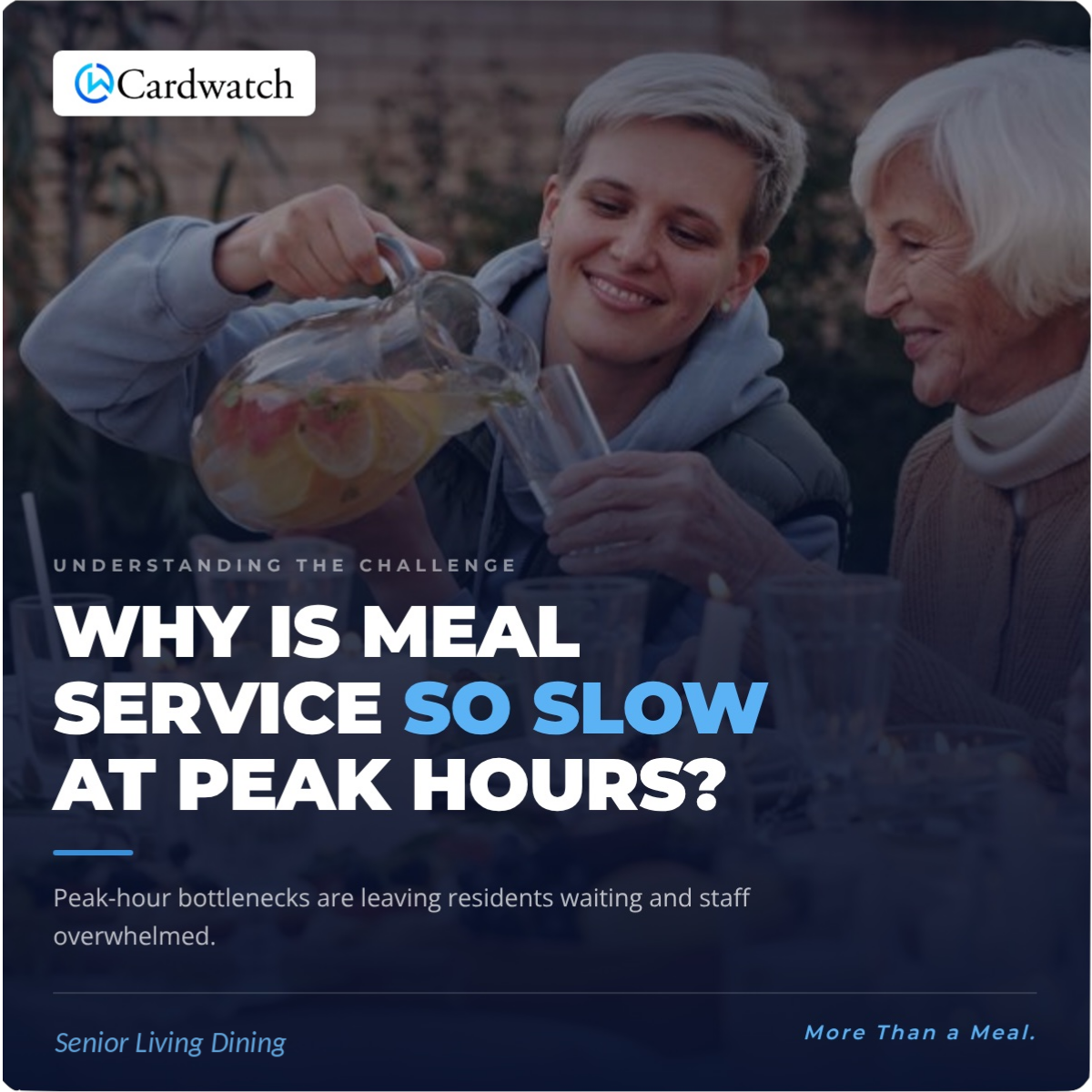
Peak-hour dining in senior living communities can quickly become overwhelming. Long wait times, delayed orders, stressed staff, and frustrated residents are common challenges many operators face daily.
But slow meal service is rarely caused by just one issue.
In most communities, delays happen because staffing shortages, outdated systems, communication gaps, and rising resident expectations all collide during busy dining periods.
One of the biggest operational bottlenecks is outdated dining technology. Many communities still rely on slow POS systems, paper processes, manual reservations, or disconnected workflows. Even small technical issues during peak service can create a chain reaction.
For example, if a POS system takes too long to process orders or kitchen tickets fail to print properly, the kitchen falls behind immediately. Orders pile up, residents wait longer, and staff spend valuable time troubleshooting instead of serving residents.
Staffing challenges only make the problem worse. Dining teams are already dealing with high turnover and labor shortages. When employees also have to manage manual meal tracking, dietary checks, or resident balance questions during rush hours, service becomes physically and mentally exhausting.
Senior living dining is also far more complex than a traditional restaurant environment.
Unlike restaurants, communities must manage:
- personalized meal plans
- dietary restrictions and allergies
- resident account balances
- subsidies and dining dollars
- healthcare-related dietary needs
Residents may also want transparency around their meal balances or spending, which adds additional steps during service.
At the same time, resident expectations are changing rapidly.
Today’s senior living residents are used to modern consumer technology like OpenTable, online ordering, and self-checkout experiences. They expect convenience, flexibility, and independence — even within senior living dining.
And while speed matters, hospitality matters even more.
Residents do not want to feel rushed. They value personalized service, transparency, and meaningful interaction with staff. In many cases, the dining experience is one of the most important social parts of their day.
That’s why modern dining technology should not replace human interaction — it should support it.
The best systems reduce operational friction so staff can spend less time fixing glitches or managing paperwork and more time caring for residents.
Features like:
- self-service kiosks
- online ordering
- scheduled ordering
- digital reservations
- resident account visibility
- integrated dietary management
can significantly reduce bottlenecks during peak hours while improving both staff efficiency and resident satisfaction.
For many communities, the solution is not simply hiring more staff. It’s modernizing workflows.
Senior living dining technology should help communities create a smoother, more personalized dining experience while giving staff more time to focus on hospitality and care — not administrative chaos.
Because in senior living, great dining service is about more than serving meals quickly. It’s about creating an experience where residents feel respected, independent, and genuinely cared for.