
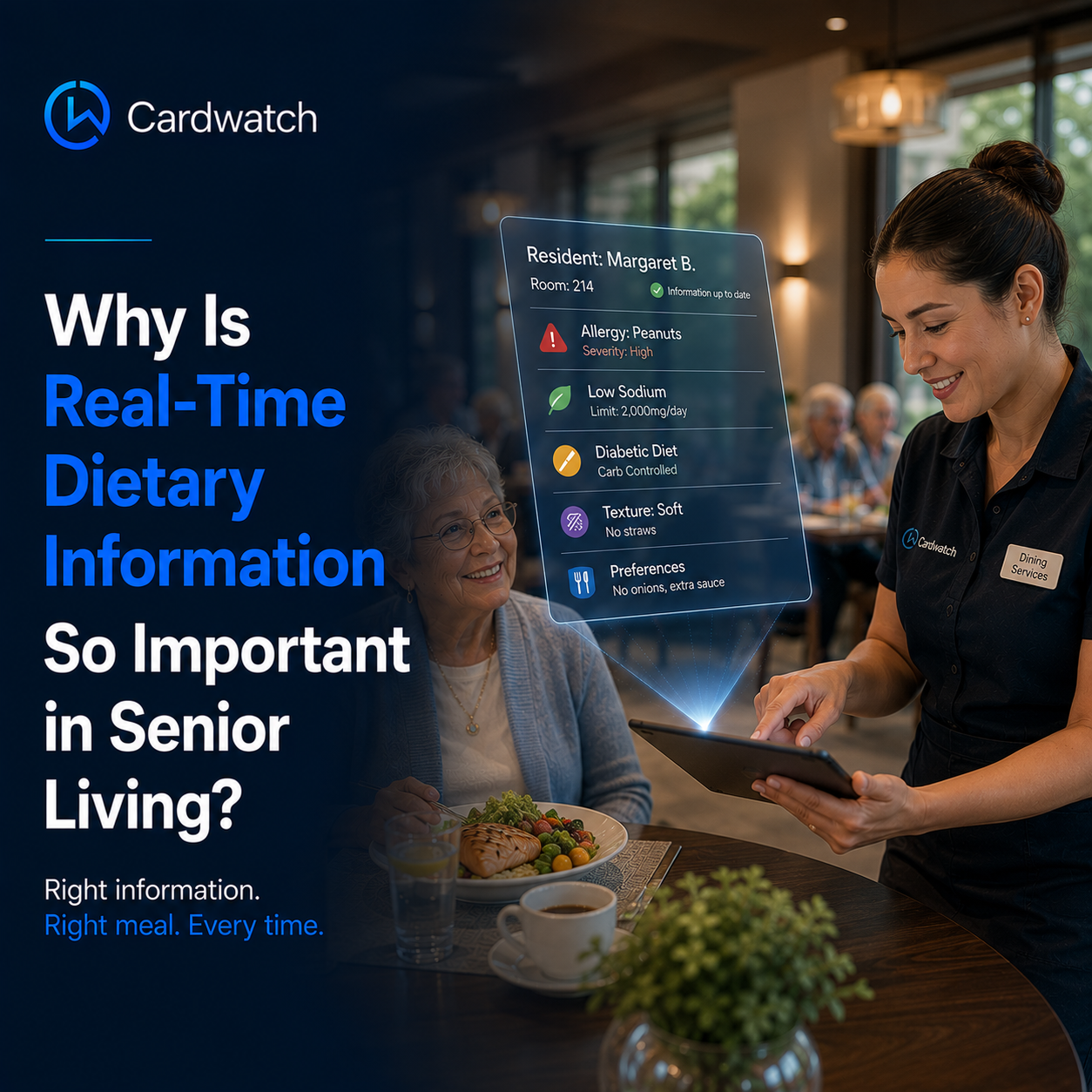
Every meal served in a senior living community is an opportunity to provide safe, personalized care.
For many residents, dietary preferences are just that, preferences. But for others, dietary requirements are critical to their health and wellbeing. Allergies, texture modifications, sodium restrictions, diabetic diets, and physician-directed meal plans all require careful attention.
When this information isn’t readily available, the risk of mistakes increases.
Many communities still rely on printed lists, handwritten notes, or verbal communication between departments. While these processes may work, they also leave room for missed updates, miscommunication, and unnecessary delays during meal service.
Access to real-time dietary information helps eliminate those challenges.
When dining staff can instantly view a resident’s dietary profile while taking an order, they can make informed decisions with greater confidence. Important information such as allergies, dietary restrictions, texture modifications, and meal preferences becomes part of the ordering process. Instead of something staff have to remember or verify separately, it is seamlessly integrated.
This improves more than food safety.
Residents appreciate receiving meals that consistently meet their individual needs without having to repeat the same information each time they dine. Furthermore, staff spend less time searching for dietary records and more time focusing on hospitality and resident care.
Real-time dietary information also improves communication between departments.
As resident needs change, updated information can be reflected throughout the dining operation. This helps ensure consistency across multiple dining venues and reduces the likelihood of errors.
Technology plays an important role in making this possible.
When dining systems integrate with electronic health records and combine that information with intelligent ordering tools, communities can provide dining teams with the information they need exactly when they need it. In addition, features such as dietary tags, allergy alerts, and Culinary AI can further support staff by identifying potential conflicts before meals are served.
At Cardwatch, resident dietary information is designed to be accessible throughout the dining experience. This helps communities deliver meals that are both safe and personalized while simplifying day-to-day operations.
Every resident deserves confidence that their meal has been prepared with their individual needs in mind.
The right technology helps make that confidence possible.