
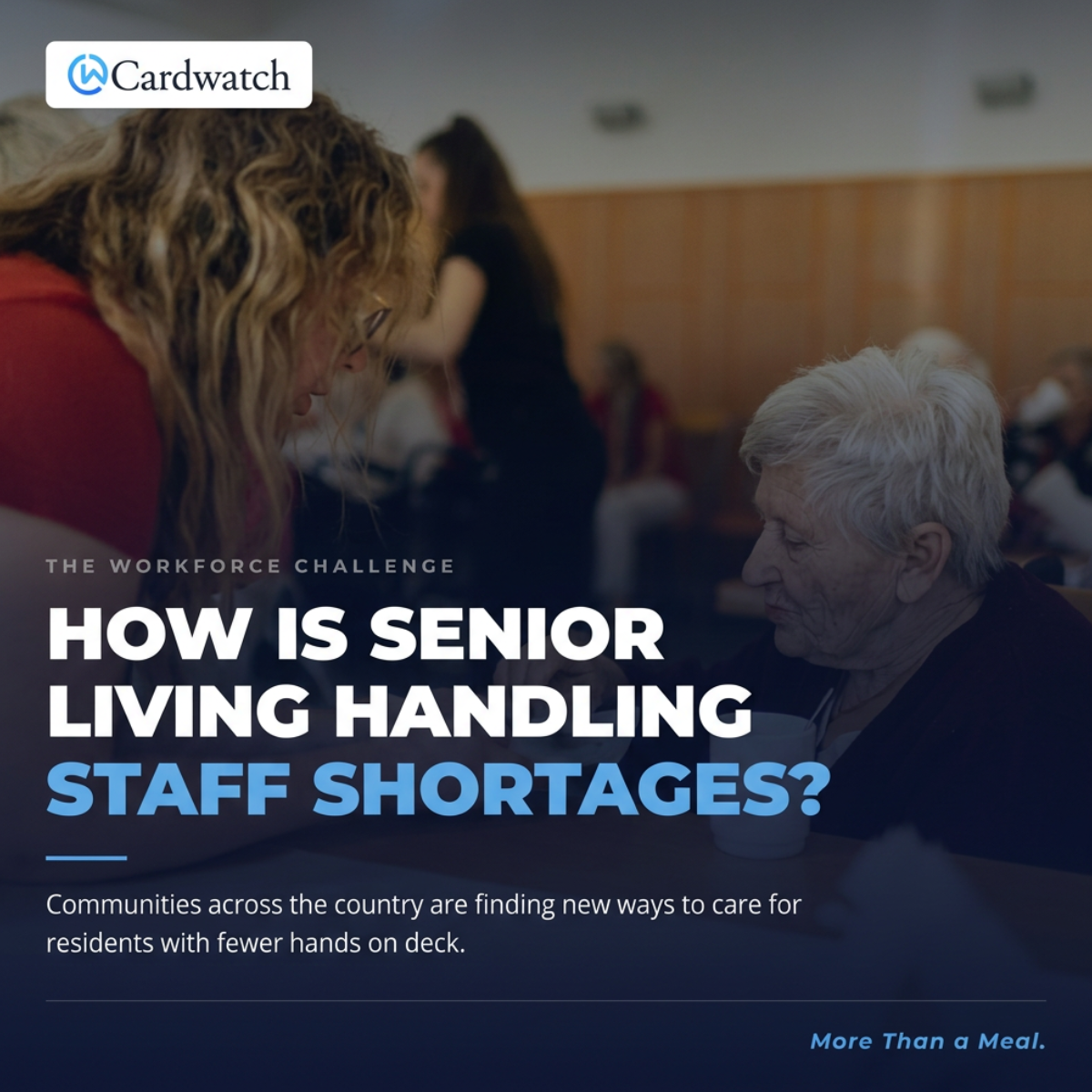
Staffing shortages continue to be one of the biggest challenges in senior living dining. High turnover, limited staff availability, and the constant need to train new employees make it difficult for communities to maintain smooth dining operations, especially during busy meal periods.
But many operators are starting to realize that staffing shortages are not just hiring problems. They are also workflow problems.
In many senior living communities, dining teams still spend valuable time on manual tasks like:
- taking reservations by phone or paper
- answering resident balance questions
- tracking meal plans manually
- managing repetitive administrative work
When teams are already understaffed, these extra tasks create even more pressure during service hours.
That’s why communities are beginning to rely more heavily on technology to reduce operational workload.
Features like:
- self-service kiosks
- online ordering
- scheduled ordering
- automatic reservations
- resident account viewing
are helping smaller dining teams operate more efficiently without compromising the resident experience.
One example we’ve seen firsthand was the rollout of self-service kiosks at a senior living café. Residents quickly became interested in using the technology because it was faster and more convenient. Once a few residents started using it confidently, others followed.
The result was immediate relief for staff during busy dining periods because ordering demand was no longer concentrated at one counter.
Resident account visibility has also made a major difference. Instead of staff constantly answering questions about dining balances throughout the day, residents can independently view their own accounts. Small workflow improvements like this save staff a surprising amount of time over the course of a day.
Another major challenge communities face is training. Many dining teams rely heavily on younger or part-time staff, which creates constant onboarding pressure. That’s why software usability matters more than ever.
Modern dining systems need to be intuitive, easy to learn, and simple enough for new employees to use confidently during busy service hours.
Most importantly, technology should not replace hospitality. It should improve it.
When staff spend less time handling repetitive workflows or fixing operational issues, they have more time to focus on residents. That could mean better service, more meaningful interactions, or simply having the time to check in with diners personally.
Because in senior living dining, solving staffing shortages is not just about hiring more people. It’s about giving existing teams better tools to succeed.