
Artificial intelligence has already changed how many people think about productivity.
Now, AI agents are taking that idea a step further.
Traditional software generally waits for a user to complete each step. AI assistants can make individual steps easier by generating content, providing recommendations, or answering questions.
Agents can help connect more of the workflow.
For senior living culinary teams, that distinction matters.
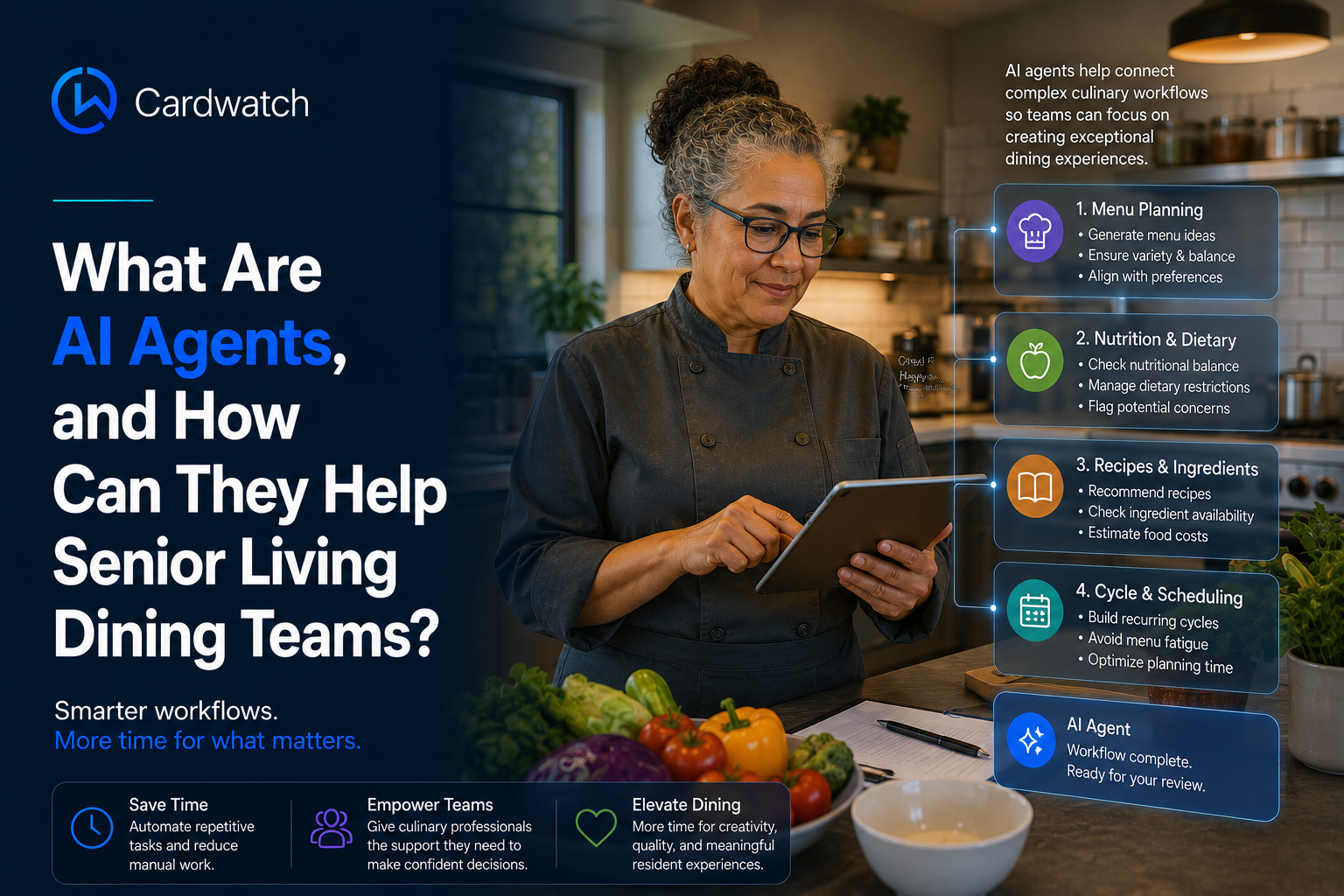
Consider the number of connected decisions involved in building menus. Teams may need to think about recipes, resident preferences, nutritional requirements, dietary restrictions, menu variety, and recurring menu cycles.
When every task is handled separately, even good technology can require significant input from the user.
An agent-based experience can help make the process more seamless by assisting across related tasks and reducing repetitive work between them.
The goal is not autonomous dining management.
Senior living dining involves people, preferences, health considerations, budgets, and professional judgment. Culinary teams should remain responsible for reviewing and approving important decisions.
Instead, agents can act as another layer of support, helping professionals move through complicated workflows more efficiently.
Cardwatch is introducing agents within Culinary AI with that philosophy in mind. Rather than simply adding AI as another feature, we’re exploring how it can make the overall culinary experience more streamlined, connected, and effortless.
The future of AI in senior living dining isn’t just about getting an answer faster.
It’s about reducing the number of steps required to get meaningful work done.