
Every dining team has experienced the lunch or dinner rush.
Orders arrive all at once, kitchens become busier, and staff work quickly to ensure every resident receives the right meal on time.
While this is a normal part of dining operations, it can also create unnecessary pressure for both staff and residents.
Scheduled ordering offers a smarter approach.
Instead of placing every order during peak service, residents can schedule meals in advance. This gives them the convenience of knowing their meal is already planned while helping dining teams prepare ahead of time.
For residents, the benefits are simple.
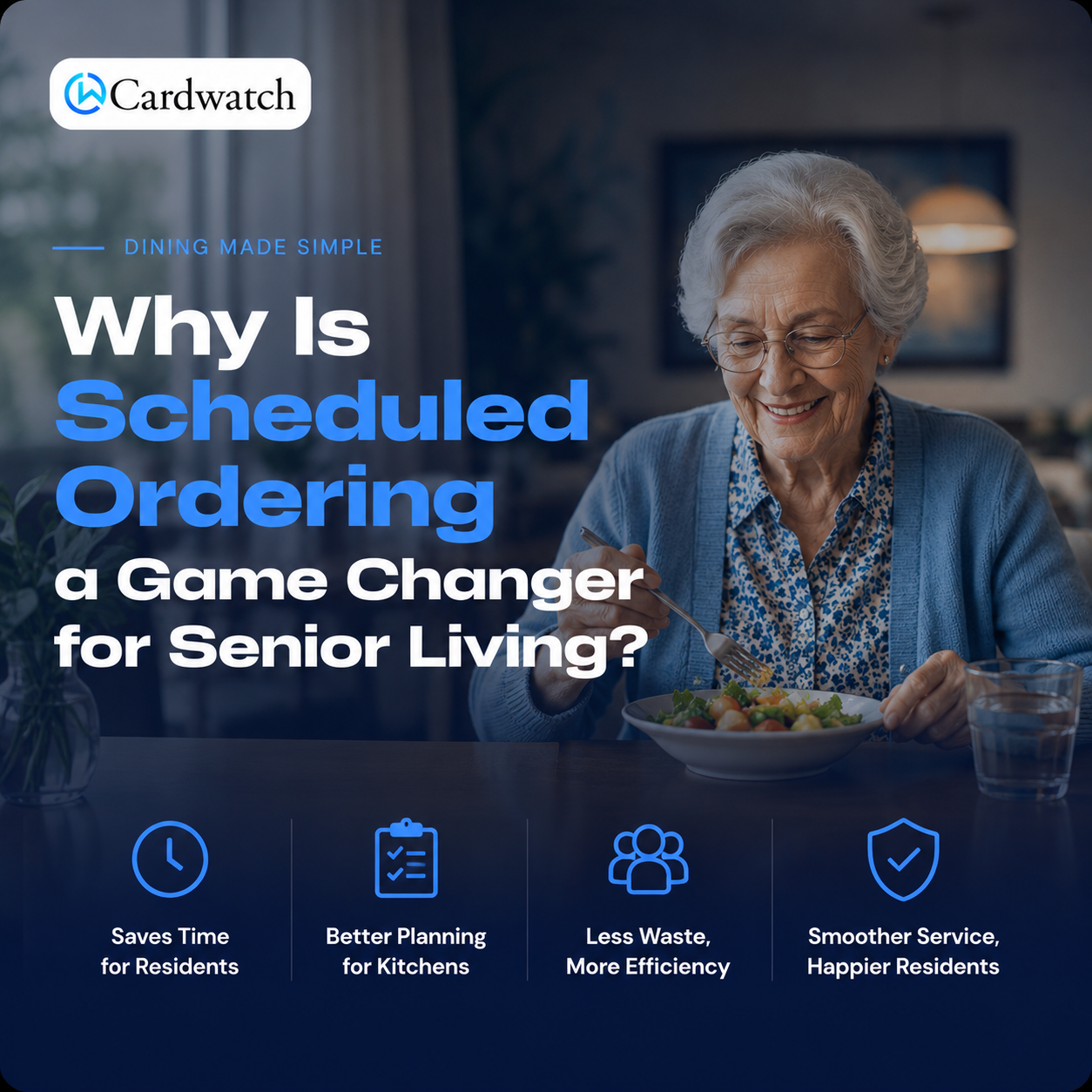
Scheduled ordering saves time, reduces waiting during busy meal periods, and provides peace of mind. Residents with consistent meal preferences or care plans don’t have to remember to place the same order every day. As a result, the dining experience becomes more convenient and predictable.
For dining teams, the impact is even greater.
When a portion of daily meals is scheduled in advance, kitchens gain valuable insight into upcoming demand. They can prepare ingredients earlier and organize workflows more efficiently. In addition, this reduces the pressure that comes with a large number of last-minute orders.
The result is smoother service, better production planning, and a more efficient dining operation.
Communities we’ve spoken with immediately recognize the value of scheduled ordering. This is because it transforms meal service from being entirely reactive to being far more predictable.
It also creates opportunities to reduce food waste by improving production planning. In addition, it helps kitchens prepare the right amount of food at the right time.
Scheduled ordering is especially valuable in senior living, where many residents have consistent routines or dietary requirements. By supporting recurring meal preferences, communities can simplify the dining experience. This also ensures residents continue to receive meals that meet their individual needs.
At Cardwatch, scheduled ordering is designed to support both residents and staff. It helps create a more organized dining operation. Further, it gives residents greater convenience and flexibility in how they enjoy their meals.
Sometimes, the most impactful technology isn’t about adding more features.
It’s about making everyday routines simpler for everyone involved.
And when residents enjoy a smoother dining experience while staff can better manage their workload, everyone benefits.