
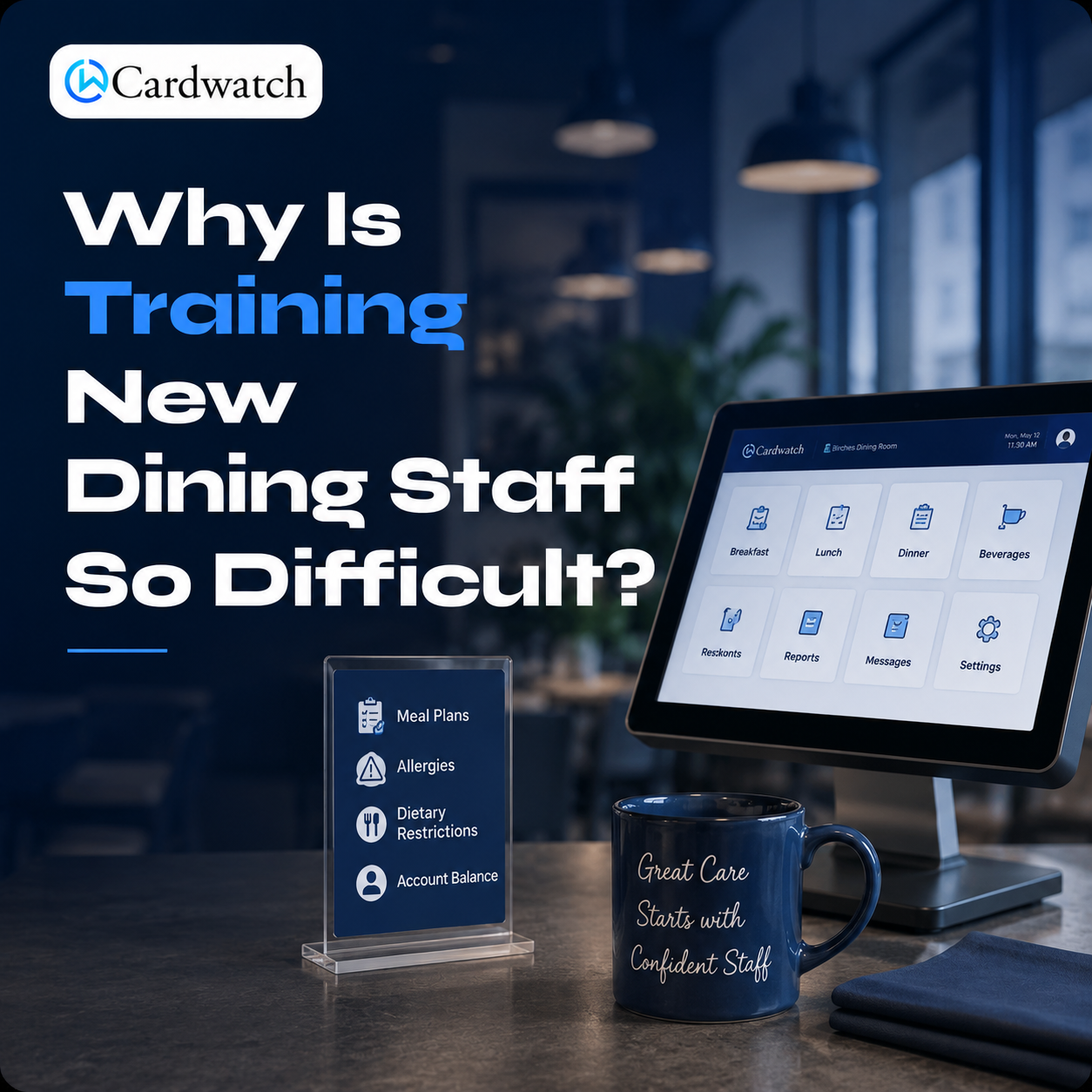
Training new dining staff has become one of the biggest challenges for senior living communities.
High staff turnover, seasonal hiring, and part-time employees mean many communities are constantly onboarding new team members. Just as one employee becomes comfortable with the system, another new hire joins the team.
The challenge isn’t just teaching someone how to use a POS system.
It’s teaching them how to navigate the complexities of senior living dining.
Unlike a traditional restaurant, dining staff must understand meal plans, resident accounts, dietary restrictions, allergies, texture-modified diets, and multiple charging rules. That’s a lot to learn, especially for someone who may only be working part-time or seasonally.
The software itself can make this challenge even harder.
Today’s employees are used to intuitive, modern applications in their everyday lives. However, when they are introduced to an outdated system with complicated workflows and confusing screens, training takes longer. As a result, confidence drops, and mistakes become more likely.
Modern dining technology should do the opposite.
Instead of expecting staff to remember complex rules, the software should guide them through the process. The more decisions the system can manage automatically, the less new employees have to memorize.
That means staff can focus on serving residents rather than worrying about whether the correct meal plan, payment method, or dining rule has been selected.
An intuitive interface also plays a significant role. When software is easy to navigate and feels familiar, new employees become productive much faster. This reduces the time communities spend on training.
Technology, however, is only part of the solution.
Communities also need ongoing support. With staff turnover being an ongoing reality, training isn’t a one-time event. It needs to be continuous. That’s why Cardwatch provides complimentary quarterly training sessions. These help clients onboard new employees, refresh existing staff, and ensure teams remain confident as their workforce evolves.
Ultimately, the goal isn’t simply to make training easier.
It’s to create an environment where new employees can quickly gain confidence, provide better service, and spend more time building relationships with residents.
Because in senior living, great dining experiences begin with confident staff, and confident staff begin with technology that is designed to support them, not slow them down.