
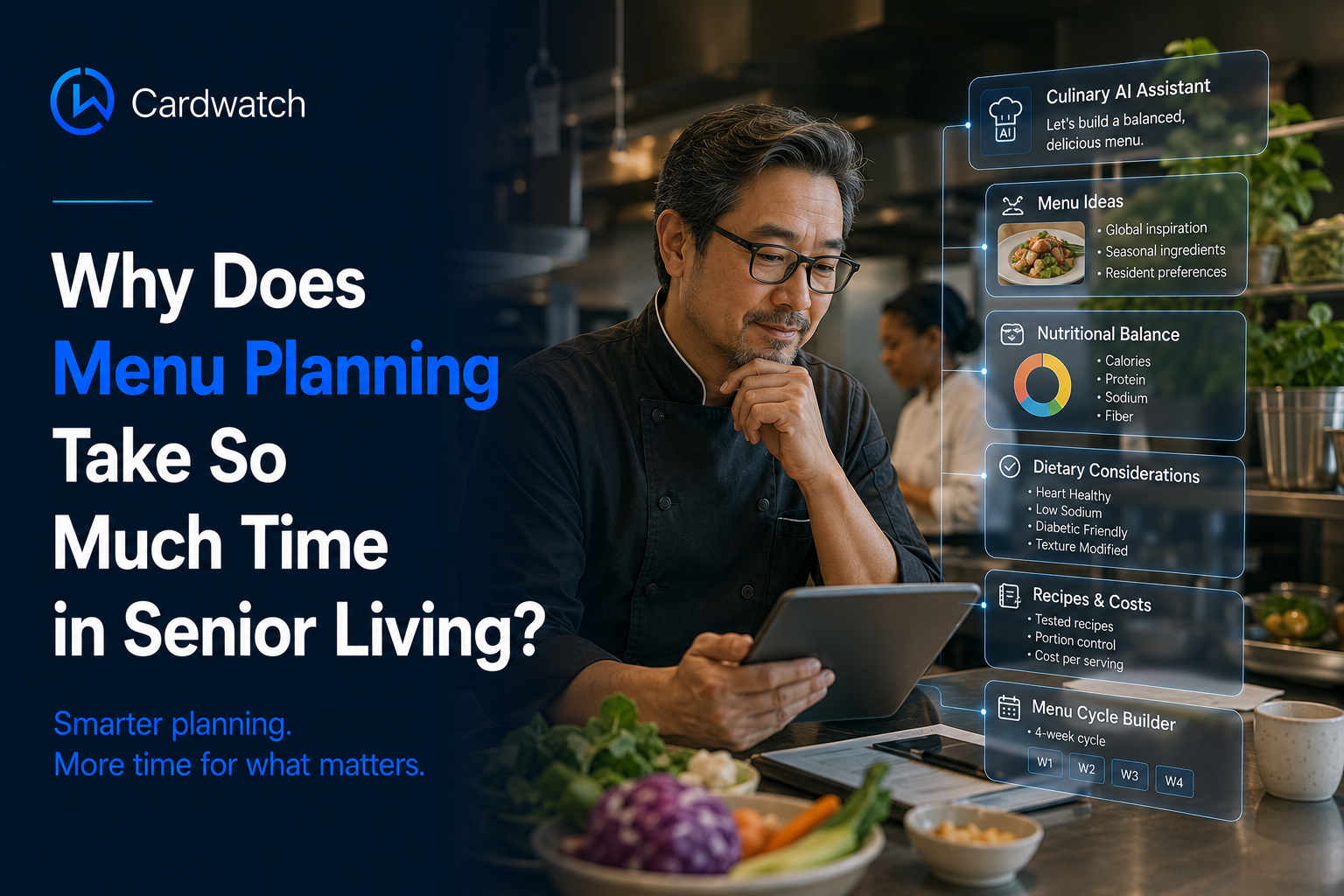
Menu planning in senior living is rarely as simple as deciding what sounds good for dinner.
Culinary teams need variety, nutritional balance, resident preferences, dietary requirements, recipes, ingredients, menu cycles, and operational practicality to work together.
Then they need to do it again for the next menu.
That’s a significant amount of cognitive and administrative work for teams that are already busy running daily dining operations.
Artificial intelligence can help reduce that burden.
The first generation of AI tools made it possible to generate ideas or answer individual questions. The next evolution is making those capabilities part of a more connected culinary workflow.
AI agents can help streamline multi-step work by assisting across related tasks rather than requiring culinary professionals to repeatedly start from scratch.
That could mean helping teams move more naturally between menu planning, recipe work, dietary considerations, and other connected culinary activities.
The objective isn’t to remove the chef from the process.
Culinary expertise, resident knowledge, creativity, and human judgment remain essential. AI should handle more of the repetitive work surrounding those decisions so professionals can focus their attention where it adds the greatest value.
This is the direction we’re taking with agents in Cardwatch Culinary AI: making sophisticated culinary workflows feel more seamless and effortless while keeping dining professionals at the center of the process.
Menu planning will always require thought.
It just shouldn’t require unnecessary work.