
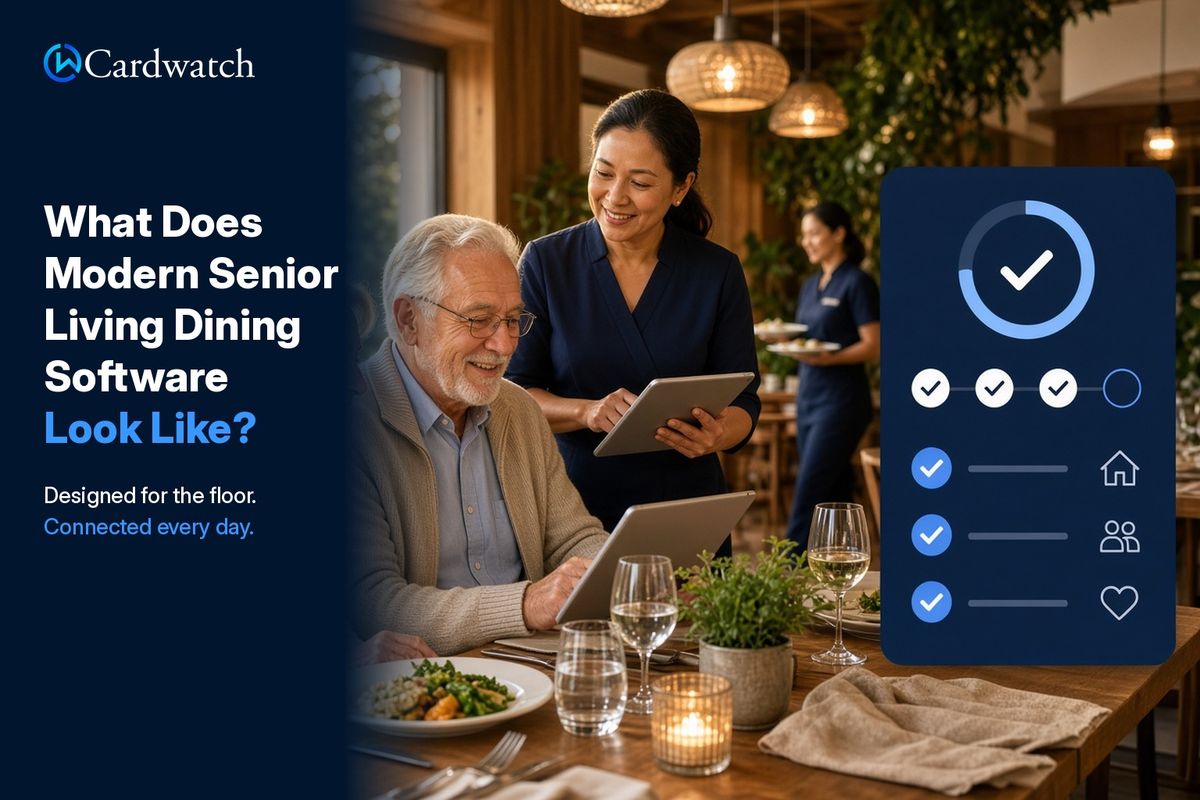
When dining directors ask what modern senior living dining software looks like, they rarely mean a feature list. They mean how the day feels: for the server at the café, the host seating dinner, the resident checking a meal plan, and the manager reviewing yesterday's numbers.
We've worked with communities that had solid tools on paper but clunky screens in practice. Staff toggled between systems. Residents waited while someone looked something up. The "new look" that matters is the one people see and use every day—at lunch rush, at a family dinner reservation, and when a resident simply wants to know what is left on their meal plan.
Here's what a modern dining stack should look and feel like on the floor in 2026, and how Cardwatch's connected platform is designed around those moments.
What Modern Senior Living Dining Software Looks Like on the Floor
Modern software should disappear into the service. Screens stay clear. Actions take a few taps. Resident context follows the person from café to dining room to mobile order. When that happens, hospitality stays front and center.
In Cardwatch, that means one platform connecting POS, mobile ordering, self-service, dining, reservations, meal plans, resident accounts, reporting, and culinary intelligence. Communities pick the apps they need and keep the connection.
At the café and retail counter
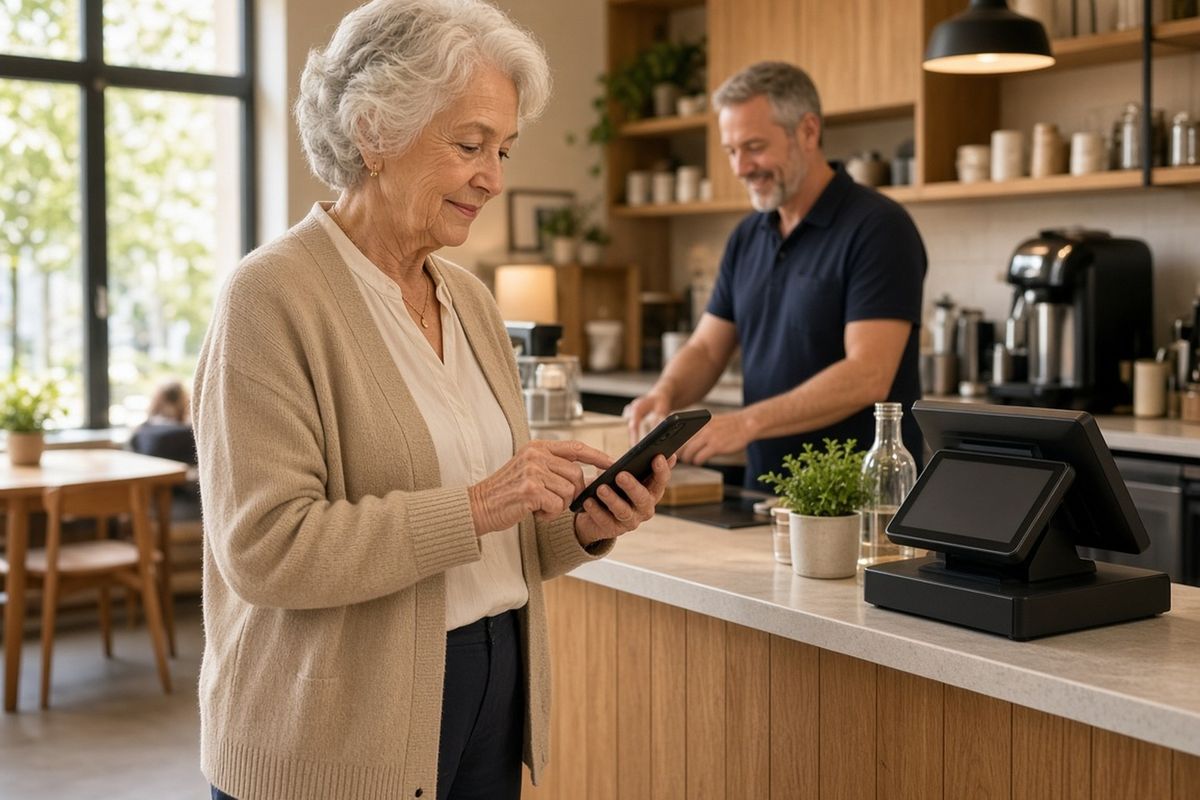
serveit is the staff-operated POS for quick-service venues, cafés, retail, and high-volume spots. The feel should be fast: identify the resident, see meal plan eligibility, ring the order, move the line. No side trips to another system for a balance check.
In the full-service dining room
hostit supports seating, tableside orders, resident accounts, and checks. Servers should see who they're helping and what that resident needs without breaking the conversation. When the tablet feels like part of service instead of a distraction, you've got the modern look right.
When residents order on their own
orderit gives residents, guests, and employees mobile ordering and reservations with meal-plan access. skipit covers self-order kiosks. Modern dining software respects independence: residents who want to order from a phone or kiosk can, without staff retyping the same order later.
At check-in and reservations
swipeit handles dining check-in: identify residents, validate meal-plan eligibility, and record visits. bookit manages dining and event reservations, party size, table assignment, and arrival. Those moments should feel calm, not like a clipboard scramble.
What Staff and Residents Should Feel Day to Day
Look and feel isn't only visual polish. It's how quickly someone can finish a common task without training for an hour first.
- Staff see the same resident account whether they're at the café, the dining room, or check-in.
- Meal plan rules and eligibility show up at the moment of service, not after the fact.
- Reservations, orders, and visits feed one set of records instead of separate spreadsheets.
- Screens stay readable under real lighting, with clear actions and fewer dead ends.
Back of house, trackit covers accounts, meal plans, billing, transactions, and reports. Culinary teams use culinaryai for recipes, menus, nutrition, and production planning, with AI agents and connections to POS, vendors, and inventory as configured. The front of house and the kitchen shouldn't feel like different companies sharing a hallway and little else.
When those pieces talk to each other, managers spend less time stitching together yesterday's truth and more time coaching the team. That quiet shift—from chasing data to using it—is part of what modern senior living dining software should deliver.
The "New Look" Is Really Connected Service Moments
Cardwatch's refreshed experience is meant to make those connected moments obvious. One platform. Every service. Better visibility. Modular apps mean you don't have to force a community into tools they won't use, but when they add the next venue or service, the resident account is already there.
If you want the broader platform overview, see Senior Living Dining Management Software: What's New in 2026?. And if you're planning a move off an older system, How Do You Upgrade Senior Living Dining Software Without Disrupting Service? walks through a step-by-step path. Cardwatch 4.0 and the connected dining approach are also covered on our senior living dining management page.
A Quick Checklist Before You Call Software "Modern"
When you evaluate modern senior living dining software, try this simple walk-through on a demo:
- Can a server complete a meal-plan sale in the café without leaving the POS?
- Can a host seat a party and see reservation context on one screen?
- Can a resident place a mobile order that still respects their meal plan?
- Can a manager pull usage and transaction reports without exporting three files?
If the answers are yes, you're looking at software that matches how communities actually run—not just a new coat of paint.
Frequently Asked Questions
What should modern senior living dining software look like for staff?
Clear screens, few taps for common tasks, and resident meal-plan context available at the point of service—whether that's a café POS, a dining room tablet, or check-in.
How does modern dining software feel different for residents?
More choice and less waiting: mobile ordering, self-service options, and smoother reservations, with meal plans that work the same way wherever they dine.
Do communities need every app to get a modern experience?
No. Cardwatch is modular. Start with the apps that match how you serve today, keep them connected, and add more as you're ready.
See the Modern Dining Experience for Yourself
Modern senior living dining software should feel calm on a busy Tuesday, not only impressive in a slide deck. When staff and residents share one connected platform, the "new look" shows up as better service.
Curious how it would fit your community? Visit Cardwatch to explore the platform or talk with our team.