
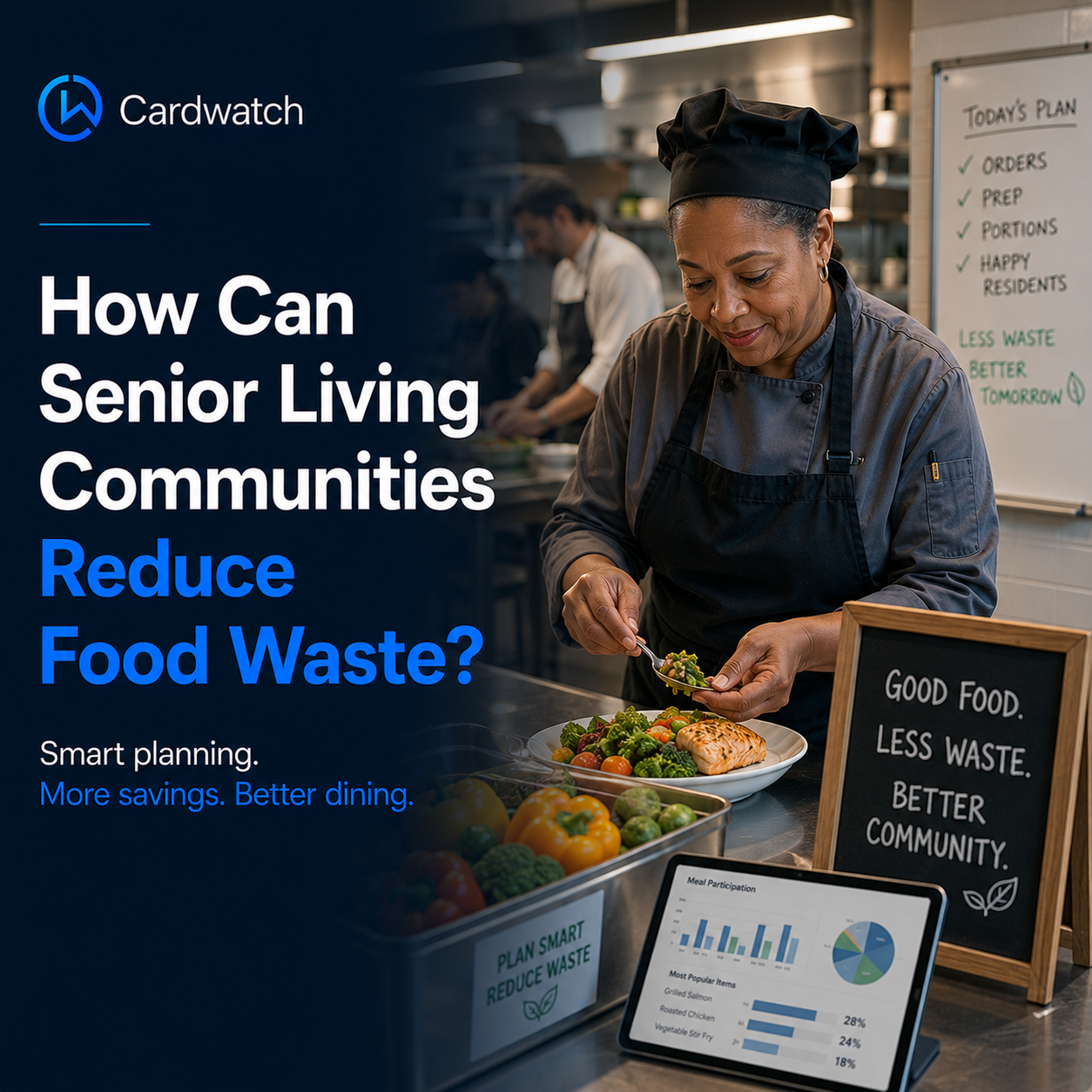
Food waste is more than an environmental concern. In senior living communities, it directly impacts food costs, labor, inventory management, and operational efficiency.
Preparing too much food increases waste and expenses, while preparing too little can lead to delays and resident dissatisfaction. Finding the right balance is one of the biggest challenges dining teams face every day.
The key to reducing food waste isn’t guesswork. It’s planning.
Modern dining technology gives communities access to valuable information that helps kitchens prepare the right amount of food at the right time. Historical ordering trends, resident participation, dining patterns, and menu popularity all provide insights that improve production planning.
Scheduled ordering is one example.
When residents place their meal orders in advance, kitchens have a clearer picture of demand before service begins. This allows chefs to better estimate portions, allocate staff efficiently, and reduce unnecessary overproduction without compromising the resident experience.
Reporting also plays an important role.
Communities can identify which menu items are consistently popular, which meals are frequently left uneaten, and how participation changes throughout the week. These insights make it easier to adjust menus, refine purchasing decisions, and build menu cycles that better reflect resident preferences.
Reducing food waste also benefits residents.
More accurate production planning means fresher meals, improved menu availability, and fewer substitutions during service. Residents receive a more consistent dining experience while kitchens operate more efficiently behind the scenes.
Technology doesn’t replace the expertise of chefs and dining managers.
Instead, it provides the information they need to make confident decisions based on real data rather than assumptions.
At Cardwatch, features such as scheduled ordering, operational reporting, flexible menu management, and Culinary AI help communities better understand resident demand and optimize daily production. The result is a dining operation that reduces waste, improves efficiency, and continues to deliver the quality residents expect.
Every meal prepared should have a purpose.
The right technology helps ensure that purpose is serving residents, not filling the waste bin.