
Every senior living kitchen has a moment like this. The chef opens the walk-in on a Thursday, looks at the shelves, and starts doing math in their head: what's on the menu through the weekend, how many residents are expected, and what the delivery on Monday needs to include. Senior living kitchen inventory management often comes down to that one person's memory and a clipboard.
It works, until it doesn't. Someone is off sick, a menu item changes, or an order gets placed twice. We've spent a lot of time with culinary teams in senior living, and inventory is one of the places where small gaps quietly add up. That is why inventory and purchasing support is part of Cardwatch culinaryai, our culinary planning app.
Why Senior Living Kitchen Inventory Management Is Different
A restaurant orders for the guests it hopes will walk in. A senior living kitchen orders for people who live in the building and eat there every day. That sounds more predictable, and in some ways it is. But it also brings its own pressures.
- Menus often run in cycles, so the same ingredients come back on a regular rhythm.
- Residents may need modified, allergen-safe, or texture-adjusted versions of a dish, which changes what has to be on hand.
- Special events, family dining, and private bookings can shift demand on short notice.
- Budgets are watched closely, and food cost is one of the biggest lines a dining director manages.
When stock counts, menus, and purchasing live in separate places, a chef ends up cross-referencing by hand. The result is usually one of two things: extra product that ages out on the shelf, or a last-minute run because something essential ran short.
Where the information usually lives
In many communities we talk with, the menu sits in one system, the count sheet is on paper or a spreadsheet, and orders go out by phone or email to suppliers. None of these are wrong on their own. The trouble is that nobody can see the whole picture at once, so purchasing depends on whoever happens to know it best.
How culinaryai Connects Menus, Production and Inventory
culinaryai is built around one planning path: ingredients and context, recipes and nutrition, menus and cycles, production and sheets, and then service. Inventory fits naturally into that path, because every recipe on a menu is really a list of ingredients that has to be in the kitchen on the right day.
Starting from the menu, not the shelf
When recipes and menu cycles carry ingredient information with them, the kitchen can plan purchasing from what it actually intends to serve. Menus become production plans, production sheets, and daily prep guidance, with census or demand context where it's configured. That same planning view helps a team think ahead about what it needs, instead of reacting to what's missing.
We wrote recently about this first step in how AI can improve senior living food production planning. Inventory is the natural next question: once you know how much you're making, do you have what you need to make it?
AI agents that support inventory workflows
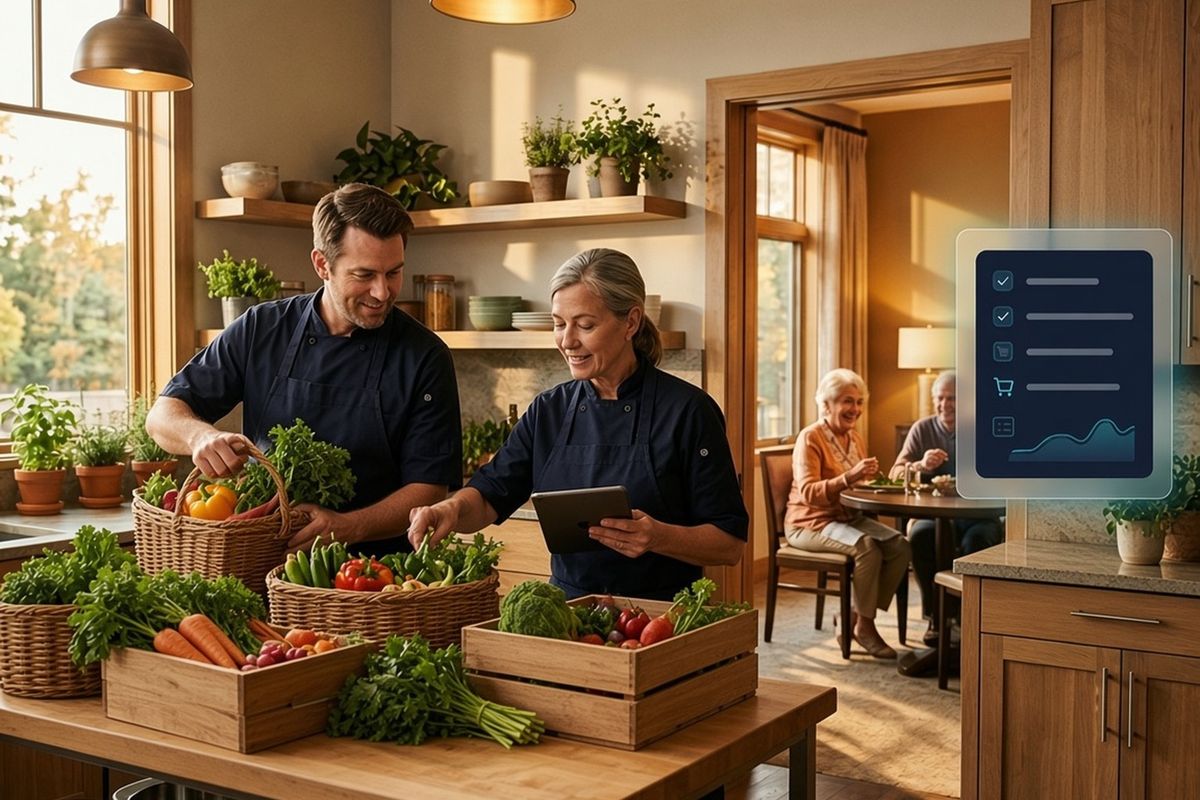
When it's connected, culinaryai includes AI agents that can help with inventory workflows, giving teams better stock visibility and support for replenishment decisions. Those agents work alongside supported vendor product, sourcing, and purchasing information, so the team isn't jumping between a count sheet and a supplier catalogue to figure out what to order.
It's worth being clear about what that means. The agents help teams ask questions, analyze what's in front of them, plan, and act. They don't take over the kitchen. Culinary professionals still decide what to serve and what to buy, and staff keep their judgment at every step.
Bringing Food Purchasing Closer to Real Demand
Good senior living food purchasing starts with knowing what's really being eaten. Through supported POS integrations, culinaryai can connect transaction activity to operational decisions. For a dining director, that's a way to see how service is actually going and to bring that into planning, rather than ordering the same quantities week after week out of habit.
Pair that with production sheets and census context, and purchasing starts to follow the community's real rhythm. That supports the goals most teams already have:
- Fewer surprises when a popular dish runs out mid-service.
- Less product sitting unused until it has to be thrown away.
- More consistent ordering, even when the usual person is away.
- A clearer view of where food spending is going.
Inventory is also closely tied to waste. If that's a pressure point for your team, our earlier post on how senior living communities can reduce food waste is a good companion read.
Keeping resident needs in the picture
Inventory in senior living isn't only about quantities. Where it's configured, culinaryai brings resident food-health profiles, nutrition, allergens, and dietary needs into planning. That helps make sure the ingredients for modified and allergen-safe meals are part of the plan from the start, not an afterthought on the order sheet.
What to Look for in Dining Inventory Software for Senior Living
If you're comparing tools, a few practical questions can help you tell the difference between a stock list and real support for your kitchen:
- Does inventory connect to your recipes, menus, and production, or is it a separate list?
- Can it reflect census or demand, not just last week's order?
- Does it work with the vendor and purchasing information your team already uses?
- Does it fit with your POS, so service activity can inform planning?
- Does it leave the final call with your culinary team?
If the answer to most of those is yes, you're looking at something that can make the Thursday walk-in check a lot less stressful.
Frequently Asked Questions
What is senior living kitchen inventory management?
It's the process of tracking what food and supplies a senior living kitchen has on hand, planning what it needs for upcoming menus and residents, and ordering from vendors at the right time and in the right amounts.
Can AI help with food purchasing in senior living?
Yes, as a support tool. In culinaryai, AI agents can help with inventory workflows for stock visibility and replenishment decisions when connected, alongside supported vendor and purchasing information. Your team still makes the purchasing decisions.
Does culinaryai connect to our POS?
culinaryai supports POS integrations that can connect transaction activity to operational decisions. What's available depends on your setup, so it's best to talk with our team about your systems.
Good food in senior living starts long before the plate, in the walk-in, on the order sheet, and in the plan. If you'd like to see how culinaryai could support your kitchen, visit Cardwatch and let's talk.